

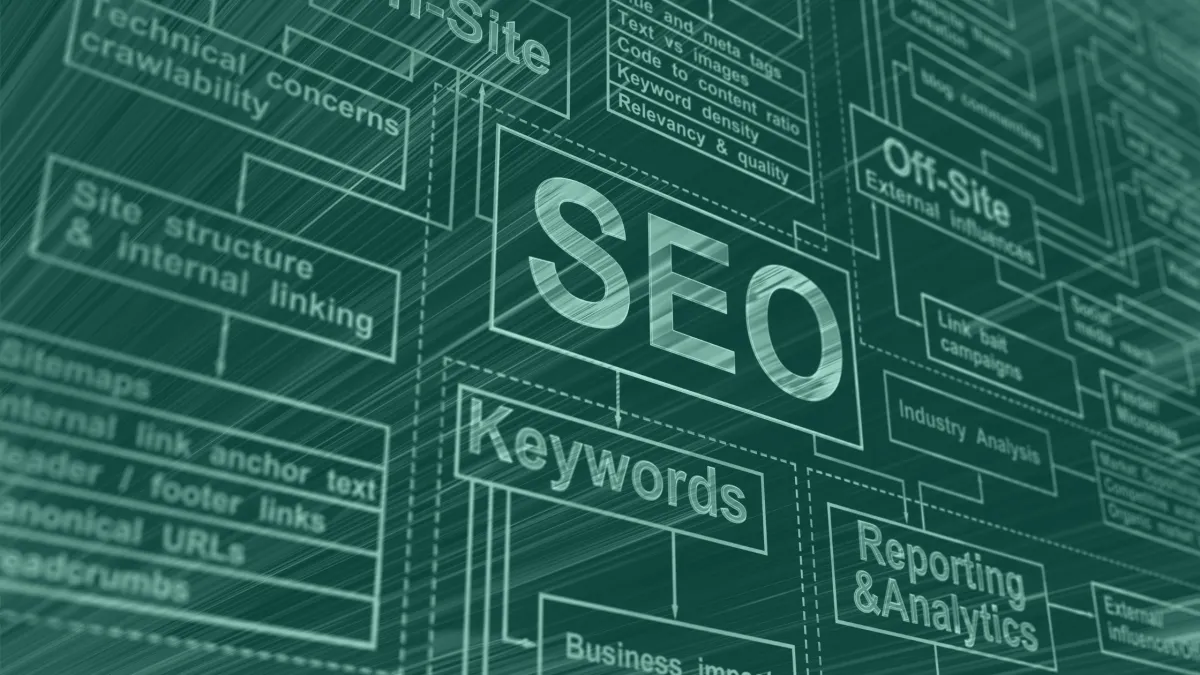
The Importance of SEO in the Digital Age & Why It Still Wins

If you’ve ever posted on social media, launched a website, or poured money into ads only to hear crickets, you’re not alone. I’ve been in digital marketing and SEO for close to a decade, and I can confidently say this: attention is harder to earn than ever. But SEO is still one of the most powerful ways to earn it.
In the digital age, people don’t guess. They search. They Google their problems, their questions, and the solutions they’re ready to pay for. That’s why SEO (search engine optimization) isn’t just a “nice-to-have” anymore. It’s the foundation of a sustainable digital marketing strategy.
This article breaks down the importance of SEO in the digital age, how it works, why it matters for everyday business owners, and how you can start using SEO for marketing in a way that actually drives results.
The Importance of SEO for Your Business
Let’s be clear: SEO in business is no longer optional.
Whether you’re a small business owner, service provider, coach, or e-commerce brand, your customers are actively searching for what you offer. If your business doesn’t show up, your competitors will. And they’ll happily take your leads, traffic, and sales.
SEO helps you:
Show up when people need you
Build trust before a sales conversation even begins
Create long-term visibility without relying solely on paid ads
In other words, SEO works while you sleep.
A Short Overview of SEO
Search engine optimization is the process of optimizing your website and content so search engines like Google can understand, trust, and rank it.
SEO isn't a dark art or a game of tricking search engine algorithms. It is, fundamentally, a practice centered on human users. The core of effective Search Engine Optimization revolves around delivering exceptional value and a flawless experience to the people using search engines.
To achieve this, SEO is about:
Answering Real Questions People Are Asking: This involves deep keyword research and understanding user intent. It means identifying the precise queries, needs, and pain points that your target audience is typing into search bars. The content must directly address these questions with clarity, authority, and comprehensiveness, anticipating follow-up questions to provide a complete solution.
Providing Valuable, Relevant, and High-Quality Content: Content is the fuel of SEO. It must be unique, accurate, well-researched, and specifically tailored to the topic at hand. "Valuable" content goes beyond simple information; it offers insights, solves problems, entertains, or inspires. "Relevant" means the content accurately matches the user's search query (intent). High quality includes readability, proper sourcing, and expertise on the subject matter.
Creating a Seamless and Optimized User Experience (UX): A great user experience keeps visitors engaged and signals trust and authority to search engines. Key components of a seamless UX include:
Technical Performance: Ensuring fast page load speeds, mobile-friendliness, and site stability (Core Web Vitals).
Intuitive Navigation: Designing a logical, easy-to-use site structure that helps users and search engine crawlers find what they need effortlessly.
Accessibility: Making sure the website is usable by everyone, regardless of device or ability.
In essence, modern SEO is the alignment of technical optimization with content excellence and user-centric design, ensuring that the best possible result is delivered to the person conducting the search. At its core, SEO connects people with solutions. And when done right, it becomes one of the strongest pillars of your digital marketing strategy.
Why Is SEO So Important for Your Business?
Here’s the reality most people don’t talk about: marketing without SEO is like opening a store without a sign.
You may have the best offer in the world, but if people can’t find you, it won’t matter.
SEO is important because it:
Increases visibility in search results
Drives consistent, qualified traffic
Builds credibility and authority
Supports every other marketing channel
Unlike trends that fade, SEO compounds over time. The effort you put in today can generate traffic and leads months (or even years) down the road.
How SEO Works
SEO works by aligning your website with how search engines evaluate content. Google uses hundreds of ranking factors, but most SEO strategies revolve around a few core components.
Let’s break them down in a way that actually makes sense.
Keyword Analysis
The Foundational Power of Keywords in Digital Strategy
Keywords are the very foundation and the essential bridge connecting your business, its valuable content, products, or services, with the audience actively seeking solutions. In the digital landscape, effective Search Engine Optimization (SEO) begins and ends with a deep, nuanced understanding of these terms.
The Scope of Comprehensive Keyword Analysis
Keyword analysis is far more than just compiling a list of popular search terms; it is a critical research discipline that provides a comprehensive view of market demand and user behavior. A thorough analysis helps you clearly understand:
What People Are Searching For: This identifies the specific problems, needs, and topics that your potential customers are inputting into search engines. It reveals the language and terminology they use, which may differ significantly from your internal business jargon.
How Often They Search (Search Volume): This metric provides a quantifiable measure of demand. It helps prioritize keywords, indicating which terms have the largest audience and justifying the effort required to rank for them. However, high volume alone is not a guarantee of success or relevance.
What Intent Is Behind Those Searches (Search Intent): This is perhaps the most critical component. Understanding intent allows you to categorize the user's ultimate goal, ensuring the content you create directly satisfies their query.
Deciphering the Critical Element: Search Intent
The true sophistication of modern SEO lies in prioritizing search intent over merely chasing high-volume, generic keywords. By understanding why a person is searching, you can deliver the most relevant, valuable content, which search engines, in turn, reward with higher rankings.
Search intent generally falls into four main categories, each signaling a different stage in the customer journey:
Informational Intent: The user is seeking knowledge or an answer to a specific question.
Example: “What is the difference between SEO and SEM?” or “how to change a tire”
Navigational Intent: The user is trying to reach a specific website or brand page.
Example: “Google Analytics login” or “Target store hours”
Commercial Investigation Intent: The user is researching products, services, or brands before making a purchase. They are comparing options and looking for reviews.
Example: “best CRM software for small business” or “iPhone 15 vs Samsung S24 review”
Transactional Intent: The user is ready to complete a purchase or take a specific action. This is the highest signal of buying readiness.
Example: “buy Nike Air Jordans online” or “discount code for Adobe Creative Cloud”
For example, someone searching “SEO for marketing” exhibits Informational Intent; they are likely looking for strategy guides, best practices, or in-depth explanations. Conversely, a search for “SEO services near me” carries a clear Transactional Intent, signaling that the user is ready to hire an agency and is actively looking for local providers.
In summary, smart SEO starts with the diligent analysis and understanding of search intent. It shifts the focus from simply attracting traffic to attracting the right kind of traffic. That means, people who are predisposed to engaging with and ultimately converting into customers for your business.
Backlink Building
The Crucial Role of Backlinks in SEO
Backlinks are hyperlinks from one website to another, acting as a "digital vote of confidence" in your content and authority. They are a foundational pillar of SEO.
Backlinks as Authority Signals
Search engines, like Google, view backlinks as powerful indicators of trustworthiness and site authority. Endorsements from reputable, authoritative websites signal that your site is a valuable resource, which is critical for improving visibility and search rankings (SERPs). Without this external validation, a site struggles to climb.Quality Over Quantity: The Core Principle of Link Building
While the number of backlinks was once key, quality now matters far more than quantity. A single, powerful backlink from a high-authority, relevant domain is better than hundreds of low-quality links.
Avoid These Common Areas for Low-Quality Backlinks
Low-quality backlinks originate from:
Spammy or irrelevant sites.
Link farms or networks (penalized by search engines).
Directory submissions with no value.
These links can harm your SEO performance through penalties. The most effective strategy is the ethical "earning" of links by creating exceptional content that naturally attracts endorsements for sustainable ranking improvement.
Content Creation
Content is the undisputed heartbeat of a successful SEO strategy. It is the fuel that powers your visibility in search engine results and the foundation upon which trust with your audience is built. Simply having a website is not enough; its pages must be populated with material that is genuinely valuable, authoritative, and relevant.
Search engines, particularly Google, have sophisticated algorithms designed to reward content that demonstrates E-E-A-T (Experience, Expertise, Authoritativeness, and Trustworthiness). Specifically, this means a high-ranking piece of content consistently achieves the following:
Answers Questions Clearly and Completely: It anticipates the user's intent and provides a direct, easy-to-understand answer to their search query. It covers the topic exhaustively, leaving no need for the user to navigate back to the search results.
Solves Real Problems: The content moves beyond mere description to offer practical, actionable solutions, guides, or insights that help the user overcome a challenge or achieve a specific goal. This practical utility is a massive signal of value.
Provides Depth, Value, and Original Insight: Shallow, surface-level content will be overlooked. Search engines prioritize material that offers unique research, original thought, detailed analysis, or comprehensive coverage that goes significantly beyond what is already available.
A robust content ecosystem utilizes a variety of formats to meet users at different stages of their journey. This includes:
Blogs and Articles: The cornerstone of an SEO strategy, used for long-tail keywords, timely topics, and demonstrating thought leadership.
Landing Pages: Highly focused content designed to convert traffic for specific offers, products, or services.
Comprehensive Guides and Whitepapers: Deep-dive resources that establish unparalleled expertise on a core subject.
Frequently Asked Questions (FAQs): Structured content that directly addresses common queries, often appearing as rich snippets or "People Also Ask" features in search results.
When you commit to consistently publishing high-quality, helpful content that adheres to these principles, you do more than just chase keywords. You effectively position your business as a trusted authority within your niche. This elevation to authority is the single most powerful factor that drives sustained, high-level rankings and organic traffic growth.
Technical SEO
Technical SEO: The Unseen Foundation of Search Success
Even the best, most compelling content—content that meticulously answers user intent and showcases deep expertise—won’t achieve its ranking potential if your website is flawed beneath the surface. This critical subsurface work is known as Technical SEO, and it ensures that search engine bots can effectively crawl, interpret, and index your content, allowing it to compete in search results.
Technical SEO focuses on optimizing the structural and operational elements of your website. Key areas of focus include:
Site Speed and Core Web Vitals (CWV): In the digital age, users expect fast, seamless experiences, and search engines do too. Site speed is a primary ranking factor. This involves optimizing server response time, compressing images, minifying CSS and JavaScript files, and leveraging browser caching. Google's Core Web Vitals—metrics like Largest Contentful Paint (LCP), First Input Delay (FID), and Cumulative Layout Shift (CLS)—provide a measurable standard for the user experience aspects of speed and visual stability, directly impacting SEO performance.
Mobile Responsiveness and Mobile-First Indexing: With the majority of search queries now originating from mobile devices, a mobile-responsive design is non-negotiable. Google uses "mobile-first indexing," meaning the mobile version of your site is the one primarily used for ranking and indexing. A strong mobile experience means ensuring all elements, content, and functionality scale correctly and remain accessible on smaller screens without distortion.
Clean Site Structure and Crawlability: A well-organized, logical site structure acts as a clear roadmap for both users and search engine crawlers. This involves using well-structured internal linking, creating a clear hierarchy (homepage > category pages > product/service pages), and generating an accurate XML sitemap. Crawlability ensures that search bots can easily discover and access all the important pages on your site without encountering barriers like broken links (404 errors) or misconfigured robots.txt files that block essential content.
Secure Browsing (HTTPS): Website security is paramount. Using an SSL certificate to enable HTTPS (Hypertext Transfer Protocol Secure) ensures that data transferred between the user's browser and the website is encrypted. Google confirmed HTTPS as a minor ranking signal, but more importantly, it builds user trust and is a prerequisite for many modern web technologies. A site that is not secure will often be flagged by browsers, deterring visitors.
Structured Data Implementation (Schema Markup): While not strictly a "structural" element, implementing structured data (Schema Markup) is a key technical task. This code helps search engines understand the context of your content (e.g., this is a recipe, this is a review, this is a business address) and can enable rich results (Rich Snippets) in the SERPs, improving click-through rates.
Neglecting Technical SEO is akin to building a beautiful house on a shaky foundation—it will eventually collapse under the weight of competition. A technically sound website is the essential baseline for any successful content or link-building strategy.
AI and SEO
The Evolving Landscape of Search: AI's Impact on SEO
AI is fundamentally changing the way search engines operate, ushering in a new era for Search Engine Optimization (SEO). Far from killing SEO, this technological shift is elevating the standards for content quality and strategic optimization. The core function of search remains the same—connecting users with the most relevant and helpful information. But the intelligence behind that connection has become exponentially more sophisticated.
The AI-Powered Search Engine
Modern search engines now leverage advanced Artificial Intelligence and Machine Learning models to move beyond simple keyword matching. These systems are designed to:
Better Understand Context: AI can interpret the surrounding text and topic of a query, understanding the nuance of a user's need, not just the words they typed. This means search can differentiate between "apple pie recipe" (a user who wants to bake) and "Apple stock price" (a user interested in finance).
Decipher User Intent: The most significant change is the shift from what a user types to why they typed it. AI accurately categorizes intent—whether the user is looking to know something (informational), do something (transactional), or go somewhere (navigational). Content that perfectly aligns with this intent is prioritized.
Analyze User Behavior: AI learns from the billions of searches conducted daily, evaluating which search results genuinely satisfy users. Metrics like dwell time, click-through rate, and bounce rate, interpreted at scale by AI, help continuously refine the ranking algorithms to favor genuinely helpful content.
The Obsolescence of Outdated Tactics
In this AI-driven environment, outdated and manipulative SEO tactics are no longer effective. In fact, they are often penalized.
Keyword Stuffing is Obsolete: The practice of unnaturally injecting keywords into content to trick algorithms is now easily detected by AI, which recognizes unnatural language patterns. High-quality content written for humans will always outrank poorly written, keyword-stuffed pieces.
Shallow Content Falls Short: Thin, surface-level articles that don't fully answer a user's question or provide real value are quickly demoted. AI prioritizes comprehensive, authoritative resources.
The Pillars of Modern, AI-Proof SEO
Instead of trying to game an ever-smarter system, modern SEO rewards an authentic focus on user experience and content quality. Businesses must shift their focus to:
Natural Language and Semantic SEO:
Focus: Writing as people speak. AI's ability to understand synonyms, related concepts, and the broader context of a topic (Semantic Search) means content must cover a subject holistically, using natural, conversational language rather than relying on exact-match keywords.
Action: Answer follow-up questions and address related topics within a single piece of content to establish authority.
Helpful, People-First Content:
Focus: Creating content whose primary purpose is to help or inform the reader. This means demonstrating expertise, experience, authority, and trustworthiness (E-E-A-T). AI models are specifically tuned to identify and reward content that provides clear, original, and evidence-based value.
Action: Conduct original research, provide real-world examples, cite reputable sources, and ensure all information is accurate and up-to-date.
Clear Structure and Readability (UX/CX):
Focus: How easily a human can consume the information. Search engines understand that good content is useless if it's poorly presented. Clear headings (H1, H2, H3), bulleted lists, short paragraphs, and a logical flow improve user experience (UX), which is a key signal for AI.
Action: Use a logical hierarchy, incorporate whitespace, optimize for mobile devices, and ensure a fast page load speed.
AI Has Raised the Bar, Not Removed the Opportunity
The rise of AI in search has not eliminated the need for SEO; it has transformed it into a discipline focused on genuine quality and user value. AI has raised the bar, demanding more thoughtful, comprehensive, and authentic content strategies. Businesses that embrace this shift (focusing less on algorithm hacks and more on providing exceptional value to their target audience) will not only survive but thrive in the evolving digital landscape, continuing to win visibility, trust, and market share.
The Role of SEO in Digital Marketing
SEO doesn’t exist in isolation; it is a fundamental pillar that supports and strengthens every facet of your digital marketing strategy. Far from being a siloed practice, Search Engine Optimization acts as the unifying force that multiplies the effectiveness of your other marketing efforts.
How SEO Elevates Your Digital Marketing Mix:
SEO provides invaluable data and foundational authority that dramatically enhances the performance of core marketing activities:
Content Marketing: SEO is the roadmap for successful content creation. By identifying high-volume, low-competition keywords and understanding search intent, SEO ensures that the content you create is precisely what your audience is actively searching for. This synergy guarantees that your valuable content not only gets found but also ranks highly, driving organic traffic and establishing your brand as a credible authority.
Social Media Visibility: Content optimized for search engines often performs better on social platforms. When your content ranks well, it increases brand recognition, leading to more shares, mentions, and inbound links. Furthermore, understanding what topics resonate in search (via SEO data) allows for the creation of more compelling, link-worthy social posts that drive followers back to your high-ranking site pages.
Email List Growth: By driving qualified, organic traffic to highly converting pages—such as lead magnet landing pages or sign-up forms—SEO directly contributes to sustainable email list growth. The users arriving via search are often further along in their research phase, making them more receptive to subscribing and engaging with your email campaigns.
Paid Ad Performance (PPC): SEO data is a goldmine for paid advertising campaigns. Information on top-performing organic keywords, user behavior on site, and effective content structures can be directly applied to refining ad copy, improving Quality Scores, and optimizing landing pages for higher conversion rates in PPC campaigns. This cross-pollination ensures your advertising budget is spent on keywords and audiences with proven conversion potential.
For example, detailed SEO analytics can reveal precisely which topics, formats, and keyword phrases resonate most deeply with your target audience—an insight that can be seamlessly repurposed to inform your email newsletters, script video content, brief social media teams, and focus the targeting of paid ad campaigns.
Simply put, SEO is the critical, strategic glue that holds a sophisticated and successful digital marketing ecosystem together, ensuring consistency, efficiency, and maximized return on investment across the board.
Should I Have an SEO Strategy?
Absolutely, and not just any strategy, but a data-driven, customized SEO strategy that is precisely tailored to achieve your unique business objectives.
The Fundamental Shift: From Guesswork to Intentional Growth
Without a clearly defined and documented SEO strategy, your efforts are reduced to guesswork. A costly, time-consuming exercise in trial and error. With a robust strategy, however, you move into a realm of intentional, predictable, and scalable growth. A successful SEO strategy is your blueprint for dominating search engine results and capturing the attention of your ideal customer.
The Core Components of a Powerful SEO Strategy
A comprehensive and resilient SEO strategy is built upon several interconnected pillars, ensuring all aspects of search engine visibility are addressed:
Clear, Quantifiable Goals (The "Why"):
Traffic: Focusing on increasing qualified, high-intent organic visitors (e.g., increase blog traffic by 30% within six months).
Leads: Converting visitors into measurable contacts (e.g., achieve a 5% conversion rate from organic traffic to eBook downloads).
Sales/Revenue: Tying SEO directly to the bottom line (e.g., increase organic search-attributed revenue by $X per quarter).
Advanced Keyword Research Aligned with User Intent (The "What"):
This goes beyond simple volume to understand the psychology behind the search. We segment keywords by intent:
Informational: What is..., How to... (Targeted by blog posts, guides).
Navigational: [Brand name] login, [Product] reviews (Targeted by core site pages, branded content).
Commercial Investigation: Best [product] for small business, [Product A] vs [Product B] (Targeted by comparison pages, case studies).
Transactional: Buy now, Pricing, Schedule demo (Targeted by product pages, service landing pages).
Strategic Content Planning and Creation (The "How"):
This involves mapping your keywords to a Content Calendar that ensures consistent publishing.
Topic Clusters & Pillar Pages: Organizing content around broad "Pillar Pages" (the core topic) that link out to more specific "Cluster Content" (supporting articles), establishing topical authority with search engines.
Optimized On-Page Elements: Ensuring every piece of content has a compelling title tag, meta description, H1 tags, and image alt text to maximize click-through rates and relevance.
Ongoing Technical and Performance Optimization (The "Maintenance"):
SEO is dynamic, not static. This crucial phase involves continuous monitoring and refinement, focusing on:
Technical SEO Audits: Ensuring site speed (Core Web Vitals), mobile-friendliness, proper use of canonical tags, and structured data (Schema markup) are perfect.
Backlink Profile Development: Building authority through high-quality, relevant external links.
Performance Monitoring: Analyzing Google Analytics and Google Search Console data to identify underperforming keywords, content gaps, and pages that need a refresh or optimization boost.
SEO is an Investment, Not a Cost
It is vital to understand that SEO is not a one-time task—it is a continuous, long-term business investment. Like compounding interest, the value of a strong SEO foundation grows exponentially over time. The efforts you make today in building authority, creating valuable content, and optimizing site architecture will pay dividends for years to come, resulting in a sustainable, high-ROI channel for customer acquisition that matures and grows alongside your business.
How SEO Can Boost Your Business
Let’s talk real impact because SEO isn’t just about rankings; it's the foundation of your digital authority and a direct driver of business growth.
Build Trust With Your Customers
People fundamentally trust Google. When a user searches for a solution and your website consistently appears on the first page of the search results, a significant portion of that inherent trust immediately transfers to your brand.
High search rankings are not just a technical achievement; they are a powerful, non-verbal signal of credibility, competence, and industry authority. All of which are registered by a potential customer even before they click on your link. This positioning acts as a third-party endorsement, suggesting that Google views your content as the most relevant, high-quality, and authoritative answer to the user's query. This psychological effect dramatically lowers barriers to entry, making a user far more likely to engage with your site, trust your products or services, and eventually convert. In essence, SEO transforms an anonymous search result into a trusted, vetted recommendation.
Improve User Experience
The Symbiotic Relationship Between SEO and User Experience (UX)
Good Search Engine Optimization (SEO) is fundamentally driven by a focus on the user, forcing content creators and web developers to adopt an audience-centric mindset. This approach ensures that a website is not just optimized for search engine crawlers, but (more importantly) is built for human visitors.
To achieve successful, sustainable SEO, one must critically evaluate the user experience across several key dimensions:
Is your site intuitive and easy to navigate? A well-structured website is paramount. Users should be able to effortlessly find the information they are looking for, whether through a clear, logical main menu, an effective internal linking structure, or a functional search bar. Poor navigation leads to frustration, high bounce rates, and reduced time on site—all signals that negatively impact search engine rankings. A positive navigational experience keeps users engaged, encouraging them to explore more pages.
Is your content accessible and easy to read? High-quality content must be presented in a way that is easily consumed. This involves using clear headings and subheadings, breaking up large blocks of text, utilizing bullet points and numbered lists, and employing a legible font with appropriate contrast. Content should also be authoritative, relevant to the user's search query, and free of unnecessary jargon. When content is difficult to parse, users are likely to leave quickly, signaling low value to search engines.
Does your site load quickly? Page speed is a critical ranking factor and a core component of UX. In today's digital environment, users expect near-instantaneous access. Slow-loading websites, often due to unoptimized images, excessive code, or poor hosting, drastically increase bounce rates. Faster loading times correlate directly with a smoother user experience, improving both engagement metrics and conversion rates.
Ultimately, investing in a better User Experience (UX) is an investment in SEO. When a site is easy to use, loads fast, and delivers clear, valuable content, users are more likely to stay, consume more content, and return later. This higher engagement (measured by metrics such as dwell time, pages per session, and lower bounce rates) sends strong positive signals to search engines. Consequently, these signals lead to better search rankings, creating a virtuous cycle where superior UX drives visibility, and increased visibility attracts more users who then benefit from the superior UX.
Increase Lead Generation
The Foundational Power of SEO: Attracting, Not Interrupting
Search Engine Optimization (SEO) is not just a buzzword; it is a fundamental, non-negotiable strategy for modern marketing success. At its core, SEO operates on a simple but profound principle: it brings in users who are actively searching for solutions, information, or products. This distinction from traditional, interruptive forms of advertising is what gives SEO its unparalleled marketing power.
When a potential customer types a query into a search engine, they are expressing explicit, high-intent demand. They are not scrolling passively through a social media feed or watching a commercial; they are raising their hand and asking for help. This active intent translates directly into superior business outcomes, which are evident in three key areas:
1. Higher-Quality Leads
Because users who find you through search are already looking for what you offer, the leads generated via SEO are inherently more qualified. They have self-selected based on a need that your content or product addresses. This contrasts sharply with outbound or interruption-based marketing, where you must spend time and resources educating a cold audience about a problem they might not even realize they have. An SEO-driven lead is a warm lead from the moment they click through.
2. Better Conversion Rates
The high intent of an SEO visitor leads naturally to superior conversion performance. A user who searched for "best noise-canceling headphones" is much more likely to make a purchase than someone who just happened to see an ad for headphones while reading an article. Since their needs align perfectly with the solution your search-optimized page provides, the friction to convert. Whether that conversion is a purchase, a sign-up, or a download, it is significantly reduced.
3. Lower Cost Per Acquisition (CPA)
In the long run, organic traffic from SEO is significantly more cost-effective than paid advertising. While SEO requires an initial investment in content creation and technical optimization, the resulting traffic is essentially "free" once the ranking is achieved. Paid ads, by contrast, carry a continuous, transactional cost for every click or impression. By consistently ranking for valuable keywords, businesses build a sustainable asset that delivers compounding returns, drastically lowering the long-term cost to acquire a new customer compared to constantly bidding in the ad auction market.
The Core Philosophy: Attract, Not Interrupt
This is why SEO for marketing is so powerful. It pivots the relationship from a business pushing its message onto a consumer (interruption) to a consumer pulling the information they need from the business (attraction). It establishes your brand as an authority and a trusted resource, ensuring that when customers are ready to buy, your solution is the one they find, click, and choose. SEO builds a durable, efficient, and trustworthy channel for customer acquisition that works tirelessly, 24/7.
Knowing the Difference Between Paid and Organic Searches
The Enduring Power of Organic Search (SEO) Over Paid Advertising
The landscape of digital marketing often presents a choice: the immediate gratification of paid advertising or the sustained effort of organic Search Engine Optimization (SEO). While paid search (PPC) offers a valuable, quick-fix solution for driving immediate traffic and achieving short-term goals, it is crucial to recognize a fundamental truth: Paid ads stop the moment you stop paying. Organic SEO keeps working.
This distinction is more than a simple cost-benefit analysis; it speaks to the very nature of a sustainable digital presence. Paid ads are essentially rented attention—an on-demand service that ceases the instant the budget runs dry. Conversely, SEO is an investment in owned equity, building an asset that continuously generates value.
Why SEO is the Foundation of Long-Term Digital Success
While paid search undoubtedly has its vital place in a comprehensive strategy. This is perfect for product launches, seasonal promotions, or testing new markets because SEO provides advantages that form the bedrock of enduring online authority:
Feature
SEO (Organic Search)
Paid Search (PPC)
Visibility Duration
Long-term visibility: An article ranking high today can continue to generate traffic for months or even years without ongoing ad spend.
Short-term visibility: Traffic ceases immediately upon stopping the campaign.
User Perception
Higher trust and credibility: Users inherently trust organic results more, viewing them as editorial endorsements from the search engine.
Lower trust (often perceived as "an ad"): Users frequently skip or view sponsored results with skepticism.
Cost Efficiency
Better ROI over time: Initial investment yields compounding returns as rankings improve and the cost per acquisition decreases significantly.
Immediate, continuous cost: You pay for every click (CPC), meaning costs scale directly with traffic.
Asset Creation
Builds Equity: Improves domain authority, website health, and brand recognition—assets that benefit all future marketing efforts.
Rents Traffic: Provides traffic but does not inherently improve the site's underlying authority or organic performance.
The Compounding Return of SEO
The "Better ROI over time" metric is where SEO truly shines. While the initial investment in high-quality content, technical optimization, and link building can be substantial and the results slower to appear than PPC, the returns are compounding. As your domain authority grows, subsequent SEO efforts become easier and more effective, leading to an exponential increase in organic traffic and lead generation without a parallel increase in expense.
The Smart Strategy: Integration, Not Isolation
The question is not whether to choose SEO or PPC, but how to leverage the strengths of both. The smartest brands use both. But they never ignore SEO.
PPC for Speed and Testing: Use paid campaigns to validate keywords, test new offers, and capture immediate market demand.
SEO for Scale and Authority: Use SEO to build the long-term authority, credibility, and sustained traffic that ultimately lowers your reliance on expensive paid channels.
Ignoring SEO means your brand is perpetually reliant on an open wallet to maintain its digital visibility. Investing in SEO means building a powerful, self-sustaining engine of growth.
Final Thoughts
In today’s crowded online world, SEO is how businesses stay visible, relevant, and competitive.
Search engine optimization is no longer just a technical tactic. It’s a business growth strategy. When you understand how SEO works and apply it consistently, you don’t just attract traffic. You attract the right traffic.
And that’s where real growth happens.
How Ramp With Vamp Can Help You Win With SEO
At Ramp With Vamp, we understand that SEO can feel overwhelming. Especially if you’re already juggling a business, clients, and content.
That’s where we come in.
We help business owners:
Build SEO strategies that align with real goals
Create content that ranks and converts
Develop a digital marketing strategy that lasts
If you’re ready to stop guessing and start growing, let’s talk.
Contact Ramp With Vamp today and let’s turn search engine optimization into your strongest marketing asset. Because in the digital age, visibility isn’t optional. And SEO is how you earn it.